


ALL >> Computers >> View Article
A Guide On Working With In-display Fingerprint Scanning



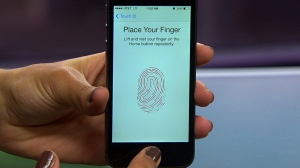
How does that work? It is a question asked by a lot of people. Just as biometric recognition isn’t new to the devices, fingerprint scanning has been here for a while. Pantech GI100 was the first mobile phone to adopt the fingerprint scanner technology in 2004.
Interestingly, Apple adopted the same tech in 2013 when the iPhone 5S was introduced in the U.S. Though the Touch ID feature has been replaced with facial recognition, fingerprint scanners have become standard on all other smartphones. Some of the devices have placed the biometrics at its backside.
Talking about the in-display fingerprint, the scanning is quite similar to the one with a physical button. The only difference is that you touch the screen instead of a button. A particular area of your phone has a scanner under the screen, which detects your fingerprint when you place it. Further, it analyzes the biometric data stored, and if it matches, your phone instantly gets ...
... unlocked.
One setback of using the in-display fingerprint tech is the smaller scanning area. Most of the time, it’s a small box at the lower end of the phone. Such smartphones come with a guide showing you how to use the scanner.
Additionally, there are two types of fingerprint scanners: optical and ultrasonic. Optical scanners mostly appear on-screen in the form of animation. Many people don’t find optical scanners as secure as the Ultrasonic scanners, which is true. The optical scanners take a picture of your fingerprint with the help of a camera, which is a simple technology. However, it’s the fastest tech used on phones like OnePlus.
On the other hand, ultrasonic scanners are more secure because it’s hard to fake a 3D fingerprint on the same. Not only this, but they can also work in a more challenging condition than the optical scanners, such as when your finger is wet.
Along with the popularity of the in-screen fingerprint tech, companies have started introducing front-facing cameras to improvise the display-to-body ratio. Thus, it is leading to the removal of headphone jacks. Instead, there’s more emphasis on using true wireless earbuds.
Coming down to the conclusion, the new tech is undoubtedly safe and fast. However, a lot of companies still lack behind to introduce their smartphones to the in-screen fingerprint scanners.
Add Comment
Computers Articles
1. Drug Monitoring And Incubator Monitoring Support Reliable Conditions For Research Healthcare And Laboratory EnvironmentsAuthor: Chris Miller
2. Desktop Rental Solutions For Events, Exhibitions, And Conferences
Author: Rashi
3. Point Of Sale Machine For Shops: How To Choose The Right One
Author: pbs
4. Master Data Management Vendors 2026: Spark Matrix™ Analysis By Qks Group
Author: Umangp
5. Ecommerce Web Development: Building An Online Store That Drives Sales And Growth
Author: scopycode
6. How To Do External Hard Drive Recovery
Author: Magic Data Recovery
7. The Process Of Flash Memory Card Recovery
Author: Magic Data Recovery
8. Spark Matrix™: Unified Endpoint Management (uem)
Author: Umangp
9. Selecting A Company For Network Security In Los Angeles
Author: Computer Networks L.A.
10. Your Best Choices For Computer Repair In Los Angeles
Author: Computer Networks L.A.
11. How To Build The Perfect Personalized Gaming Rig For Your Gaming Needs?
Author: Jack Williams
12. Mobile Workforce Trends Transform Modern Crm Strategies
Author: Larry Caretsky
13. Ai-powered Field Service Software Transforms Business Operations
Author: Larry Caretsky
14. Workforce Identity And Access Management Market Research: Trends, Vendors, And Future Outlook
Author: Umangp
15. Identity Fabric Market Research: Trends, Vendor Landscape, And Future Outlook
Author: Umangp