


ALL >> Art >> View Article
Furniture Designer, Sculptor, And Artist Paul Evans



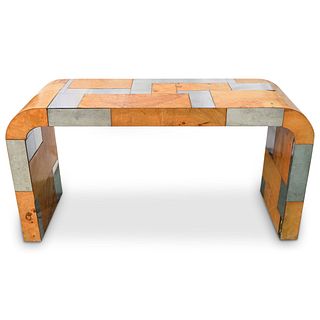
Paul R. Evans popularly known as Paul Evans was the main figure in the mid-century American studio and brutalist furniture development. Evans reliably pushed limits with his imaginative ways to deal with metalsmithing and furniture production. Paul Evans furniture has a special attraction. His otherworldly works, which challenged what regular items resembled and how they were made, keep on uncovering the entrancing crosscurrents among figure and plan. Evans started working with metal in the mid-1950s—first at the Rochester Institute of Technology's School for American Craftsmen (SAC) in Rochester, New York, where he concentrated under the persuasive American silversmiths and fashioners John (Jack) Prip and Lawrence Copeland, and later at the Cranbrook Academy of Art in Bloomfield Hills, Michigan. Evans at that point moved to Sturbridge Village, Massachusetts, where he functioned as a full-time skilled worker, showing ...
... different silversmithing strategies at Old Sturbridge Village, a living gallery that re-makes life in provincial New England during the eighteenth and nineteenth hundreds of years. In 1955, looking for a difference in landscape, Evans moved to Lambertville, New Jersey, a notable asylum for specialists and experts, and opened a workshop in a previous chicken coop.
He before long got to know the self-educated furniture creator, Phillip Lloyd Powell, who urged Evans to take his metallurgy abilities and apply them to furniture. For the following ten years, the team shared a display area in close by New Hope, Pennsylvania, and worked together on pieces that merged Powell's wood ability and Evans' metalworking abilities. The last part of the 1950s and 1960s was an unfathomably significant period for Evans as his workshop activity proceeded to develop and he started creating a portion of his most praised structures. In 1964, Paul Evans turned into an included creator for the furniture maker Directional Furniture, an affiliation that fundamentally affected the nature and extent of his creation. As a result, his style became so popular that now there are Paul Evans furniture auctionPaul Evans furniture auction and sales held times and again.
Evans pieces were often marked, and a portion of the custom things suffer a heart attack and a date. Evans' mix of handcraft and innovation expected the restricted release craftsmanship furniture of today. The craftsman's relationship with Directional Furniture set a one-of-a-kind norm for innovative assembling by demanding each piece be made by hand, wrapped up by hand, and regulated by the craftsman at each progression of creation, each piece in turn.
Evans presented a few lines, including the Sculpted Bronze arrangement (the mid-1960s), which included applying epoxy gum over a pressed wood base or steel outline, molding it by hand, and covering it with atomized bronze; the Argente arrangement (late 1960s to mid-1970s), which highlighted aluminum and color mixed metal surfaces welded together (a cycle that was considered profoundly harmful and immediately deserted) to make unique structures; and the well-known Cityscape arrangement (1970s), which was motivated by the Manhattan horizon. Flaunting smooth, rich surfaces made of metal and chrome, the Cityscape arrangement contrasted enormously from Evans' etched steelworks of the 1960s, which were painted and exceptionally finished. The Cityscape arrangement earned huge acknowledgment for Paul Evans furniture and set up Directional Furniture as quite possibly the most remarkable mid-century configuration organization of the 20th century. In 1966, Evans moved to Plumsteadville, Pennsylvania, where he opened a bigger workshop. Free of his work for Directional, Evans kept on making models, produce commissions, and specialty his commended design front screens, sideboards, arrangements, seats, and tables, which highlighted high-alleviation, hand-manufactured beautiful components. In 1979, Evans opened a second display area in New York City. Evans passed on of a coronary failure in 1987, not long after resigning to Massachusetts.
In the 21st century, Evans' work climbed in standing, making it among the most collectible in the plan market. Gwen Stefani, Lenny Kravitz, and Tommy Hilfiger were accounted to be among devoted gatherers. Evans cupboards and bookshelves started to sell for more than $250,000 at closeout. In 2014, the James A. Michener Art Museum, in Doylestown, Pennsylvania, arranged a review of Evans' work. In 2017, an Evans bureau sold at sell-off for $382,000. Interested people can find Paul Evans furniture for sale online.
Add Comment
Art Articles
1. 'poets And Writers' Radio Host Henry Mccarthy Interviews Award-winning Author Charlene WexlerAuthor: William Bike
2. Metal Wall Decor: Exploring The Beauty Of Handcrafted Wall Art
Author: deepak
3. Balarama Avatar: Exploring The Divine Role Of Lord Balarama
Author: deepak
4. Veera Lakshmi: The Divine Goddess Of Courage And Prosperity
Author: deepak
5. Katyayani Amman : The Goddess Of Strength, Courage And Devotion
Author: deepak
6. Valueglass Calls For Independent Choice As Safelite Absorbs Kitsap Competitor
Author: Charles Groves
7. Why Online Art Galleries Are Becoming So Popular Across The Globe?
Author: Harry Reinhold
8. The World Of Advantages That An Online Exhibition Space Offers
Author: Harry Reinhold
9. Buddha Wall Decor – Bring Peace, Balance And Artistic Beauty Into Your Space
Author: lokeh
10. Why Do We Worship Different Gods?
Author: lokeh
11. "the Real Story Behind Who First Walked Girivalam"
Author: lokeh
12. Have You Ever Seen Murugan Without The Vel?
Author: lokeh
13. Traditional Pooja Mandapam Ideas For A Peaceful Home Temple
Author: deepak
14. Dhana Lakshmi : Exploring The Goddess Of Wealth And Abundance
Author: deepak
15. Was Hanuman Really His Name?
Author: lokeh